
How grandparents are filling the UK's childcare gap
20 July 2026
6 min read
Now in its fourth year, our grandparents childcare research explores how grandparents cover childcare and expenses, including funding family holidays.

Each year, we ask 2,000 grandparents with grandchildren under the age of 18 how much time and money they spend on their grandchildren, and how they feel about it.
Key findings 2026:
- 52% of grandparents look after their grandchildren during the working week.
- 56% also help during school holidays.
- Grandparents spend an average of £1,659 a year on childcare costs.
The findings show how vital grandparents are in plugging the UK’s childcare gap.
For information on any of SunLife’s reports or past editions, email pressoffice@sunlife.co.uk.
Over half of grandparents provide childcare during the working week
Over half (52%) of UK grandparents provide childcare during the working week. This rises to two-thirds among those aged 35–44 (66%).
They usually offer this childcare for free, with only 5% receiving any financial support.
Grandparents spend, on average, 10 hours per week looking after grandchildren. But it's a lot more for some. A third (33%) of those with pre-school aged grandchildren provide more than 10 hours a week, compared to a quarter (26%) of those with secondary-school aged grandchildren.
One in 20 grandparents (5%) provide more than 30 hours of childcare per week.
During school holidays, grandparents' care drops to around 8 hours on average, and 44% of grandparents step back altogether during this period.
% of Grandparents providing childcare
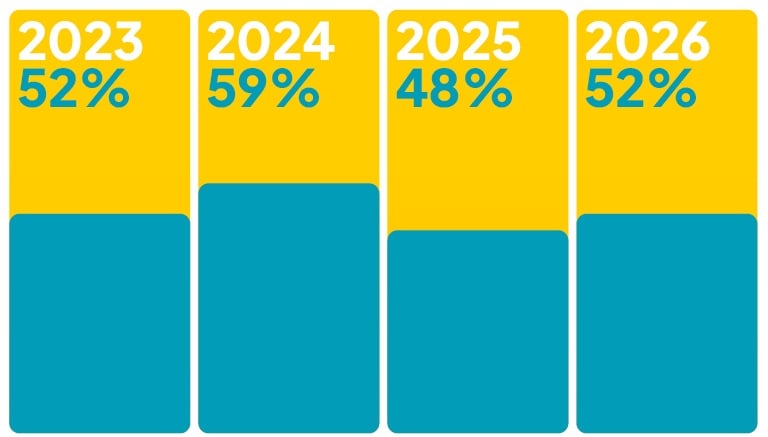
Childcare expenses cost grandparents an average of £1,659 a year
Grandparents spend both time and money on their grandchildren, with almost three quarters of grandparents (74%) often chipping in for childcare-related costs.
The most common weekly expenses are:
| Expense | % of grandparents who spend on this | Average amount spent | Amount spent vs 2025 |
| Food and snacks | 51% | £12.80 per week | +24% |
| Days out or activities |
40% |
£23.10 per week | +18% |
| Home activity materials | 25% | £10.10 per week | +19% |
| Transport | 13% | £14.50 per week | +30% |
| Extracurricular activities | 13% | £18.80 per week | +15% |
The most common yearly expenses are:
| Expense | % of grandparents who spend on this | Average amount spent | Amount spent vs 2025 |
| Books | 21% | £61.50 per year | n/a |
| School uniform | 10% | £112.50 per year | +45% |
| School trips | 10% | £126.30 per year | +32% |
| Kit for school, hobbies or clubs | 10% | £98.50 per year | +50% |
| Tech | 9% | £222.90 per year | n/a |
| Costumes for school plays / fancy dress days | 7% | £68 per year | +47% |
Overall, childcare expenses cost grandparents an average of £1,659 a year.
To help cover the day-to-day financial impact of caring for grandchildren, 7% of grandparents use savings or investments. 3% take money from their tax-free pension lump sum, and 2% utilise equity release, or remortgage.
Worryingly, 8% of 35–54-year-old grandparents reduce or stop their own pension contributions as a direct result of supporting their grandchildren.
Among grandparents taking financial action, the average amount they've had to find is £8,157.20. This covers their own childcare expenses as well as financial gifts for their grandchildren's parents specifically for childcare costs.

Just 14% of grandparents know about Specified Adult Childcare Credits
Awareness of Specified Adult Childcare Credits is extremely low among grandparents, at only 14%. Just 1% have claimed it, with a further 2% planning to apply.
The vast majority, 84%, have never heard of the credit at all. Even among those aware of the scheme, barriers remain. 11% do not believe they are eligible or do not plan to apply.
What are Specified Adult Childcare Credits?
Specified Adult Childcare Credits are National Insurance credits, transferred from the parent or guardian to someone who looks after a child.
Claiming Specified Adult Childcare Credits can help you top up missing National Insurance credits for your record. Doing this can ensure you get the full State Pension when you retire.

Grandparents are chipping in to enable family holidays
Grandparents are playing a significant financial role in family holidays. Many step in to cover not just their grandchildren’s costs, but often the parents too.
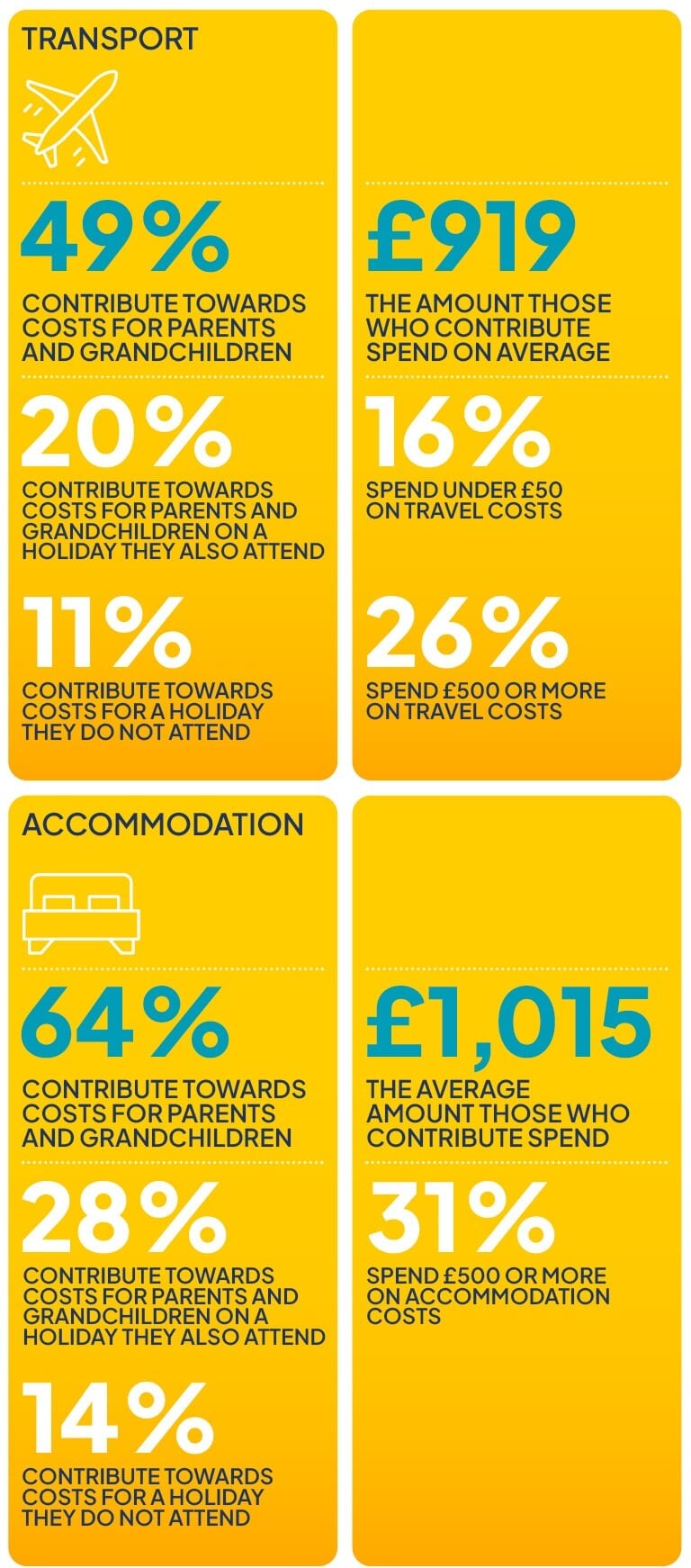
Around half (49%) contribute to transport costs and nearly two-thirds (64%) pay towards accommodation.
One in five grandparents (20%) contribute towards transport, and 28% pay towards accommodation for their children and grandchildren on holidays they also attend.
However, many grandparents also pay towards family holidays they didn't go on themselves. 11% donate towards transport costs, and 14% towards accommodation for these trips.
On average, those who contribute spend around £919 on transport and £1,015 on accommodation. Some keep costs low, with one in six (16%) spending under £50 on transport.
However, over a quarter spend £500 or more on both transport (26%) and accommodation (31%).
Holiday-related spending for Grandparents
- Transport. 49% contribute towards costs for parents and grandchildren
- 20% contribute towards costs for parents and grandchildren on a holiday they also attend
- 11% contribute towards costs for a holiday they do not attend
- £919 the amount those who contribute spend on average
- 16% spend under £50 on travel costs
- 26% spend £500 or more on travel costs
- Accommodation. 64% contribute towards costs for parents and grandchildren
- 28% contribute towards costs for parents and grandchildren on a holiday they also attend
- 14% contribute towards costs for a holiday they do not attend
- £1,015 the average amount those who contribute spend
- 31% spend £500 or more on accommodation costs
One in three grandparents change their working pattern to support their grandchildren
33% of grandparents change their working pattern to provide childcare, rising to 43% of those who provide regular care.
Some make changes to give themselves more time for childcare by:
- Using annual leave (11%)
- Changing their working hours (9%)
- Using flexible working (6%)
- Reducing working hours (5%)
- Retiring early (4%)
- Taking unpaid leave (3%)
But a need for more time can conflict with the need for income to support childcare. As a result, 2% of grandparents delay retirement, return to work, or work more hours to help cover their grandchildren’s costs.
Other grandparents avoid moving away from family (7%) so as to be near enough to offer support.
Adjustments are far more common among grandparents aged 35–54, where six in ten (61%) report making at least one change.
Even with adjustments, grandparents who made changes mostly remain positive. Around two-thirds (66%) are happy with the decision, with 40% saying it improves their wellbeing or quality of life.
However, 14% feel they have no choice. The same proportion say it’s not how they expected to spend this stage of life.
Many have financial concerns as well. One in ten (10%) report a negative impact on their finances. 8% worry about long-term financial impacts and 7% report negative saving impacts.

Grandparents just want to have fun
While most grandparents enjoy looking after their grandchildren (82%), over a third (37%) wish they could spend more ‘fun’ time with them instead of childcare. A third shared the same sentiment in 2025, but only 17% in 2024 and 18% in 2023 had the same desire.
Over a quarter (27%) of grandparents in 2026 feel obliged to provide childcare, up 3% from last year (24%) and 18% since 2024 (9%).
11% of grandparents in 2024 and 2023 faced financial difficulty because of the extra expenses their grandchildren require. This went up last year to 14% and increased to 16% this year.
Last year, only 19% of grandparents felt their children and grandchildren relied on them more than expected. This increased to 23% this year, while in 2024 and 2023 this figure was 13%.
Similarly, 27% of grandparents say their children wouldn’t cope financially without their help with childcare. This is up from 25% in 2025, 18% in 2024 and 19% in 2023.
Real-world value of grandparent care
If grandparents were paid a nanny’s wage, they’d earn almost £9,000 a year. But a grandparent’s role covers a lot of different jobs, from nanny to taxi driver, to chef, and more.
Try our Grandparent Salary Calculator to see the real-world value of the support they offer.
Report background
Our grandparents research was undertaken in June 2026.
2,000 online interviews were completed with people living in the UK, who have at least one grandchild under 18.