
Welcome to the SunLife Cost of Dying Report 2026
Welcome to the SunLife Cost of Dying Report 2026
The UK’s longest-running study into funeral costs over the last 22 years
With the price of funerals continuing to rise, many people are seeking cheaper alternatives or cost-cutting measures.
Consumers are demanding a wider range of funerals – and so this Cost of Dying Report highlights more options than ever before.
SunLife’s industry-leading research explores how people are covering mounting funeral costs, changing attitudes towards final farewells, and the evolving landscape facing the industry.
As always, both funeral directors and those who’ve recently organised a send-off have given us plenty of tips and advice on what (and what not) to do.
And for even more insight into funeral costs and trends, download our full PDF report.
How much does a funeral cost in the UK today?
In the UK, the average cost of a simple attended funeral – a common, modern type of send-off – is £3,828.
This is a saving of almost £700 when compared to a traditional attended funeral, at £4,510.
On the other hand, the lowest-priced type of funeral, a direct cremation, now sits at £1,628.
However, when the send-off extras that people are choosing are taken into account, the total funeral spend reaches £5,140.
Funeral costs
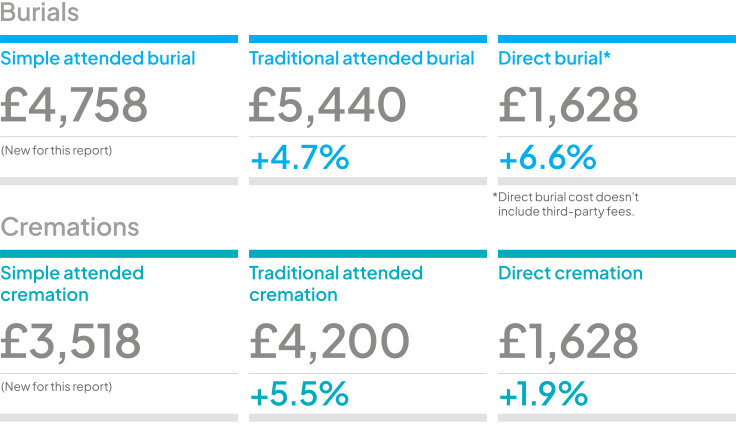
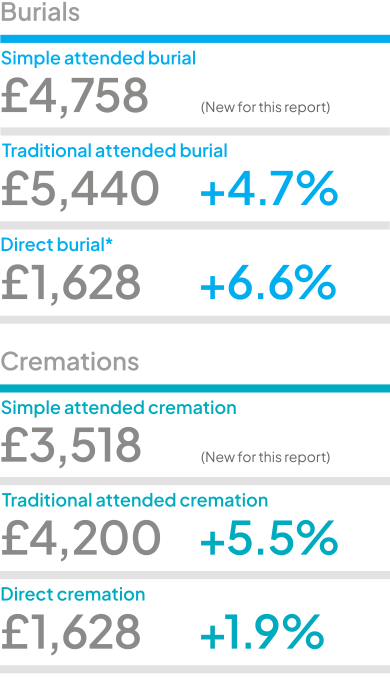
*Direct burial cost doesn't include third-party fees.
Simple attended funerals
A simple attended funeral is one that includes all commonly chosen elements. According to funeral directors, it’s the most popular type these days – representing a modern service.
The cost of a simple attended burial is £4,758, while a simple attended cremation is more affordable at £3,518.
Taking these separate prices and balancing it by their relative popularity, the average cost of a simple attended funeral sits at £3,828. All these figures are new for this report.
Traditional attended funerals
A traditional attended funeral expands on a simple attended funeral with a handful of extras, such as a limousine and a mid-range coffin.
As expected, traditional attended funerals are pricier than their simple counterparts. A burial is the most expensive variety – £5,440 (up 4.7% on the previous year) – while a cremation comes in at £4,200 (up 5.5%).
Their weighted average shows an increase of 5.3% to £4,510, making it the highest year-on-year rise since 2016.
Direct funerals
Direct cremations and direct burials are the unattended alternatives – the deceased is taken directly to the crematorium or cemetery, and there’s no service or guests.
Like traditional attended funerals, direct funerals have seen price increases across the board – but still remain the most affordable options. Both direct cremations and direct burials now cost £1,628 – up 1.9% and 6.6% respectively.
Funeral costs by UK regions
Where you live can make a big difference to the cost of a funeral. While the national average price of a simple attended funeral is £3,828, regional costs can vary by more than £1,000.
As we’ve found in previous years, Northern Ireland is the most affordable place to die in the UK, with a simple attended funeral averaging £3,105.
And at £4,897, London ranks as the highest price by some margin. That’s a mark-up of 58% from the least to the most expensive region.
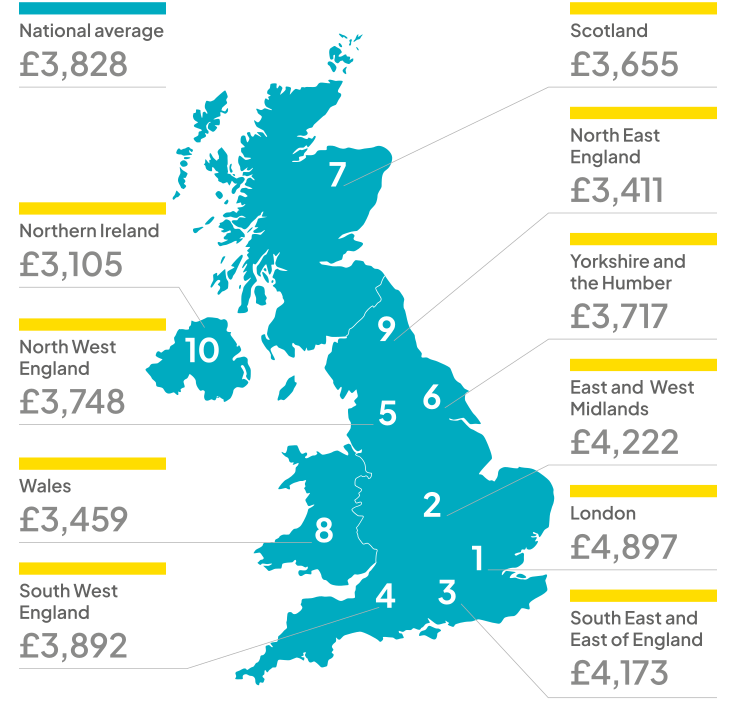
The costs are ranked from most expensive region to least expensive. The data is as follows:
- London £4,897
- East and West Midlands £4,222
- South East and East of England £4,173
- South West England £3,892
- North West England £3,748
- Yorkshire and the Humber £3,717
- Scotland £3,655
- Wales £3,459
- North East England £3,411
- Northern Ireland £3,105
National average £3,828
Send-off costs
How much are we spending on a send-off?
A send-off is all the optional extras that can make a funeral more personal to the deceased and their loved ones, like the transport, catering, and wake.
Flowers and order sheets are still the send-off extras that people most commonly choose.
A memorial is still the most expensive send-off extra, although it remains nearly unchanged from the previous year.
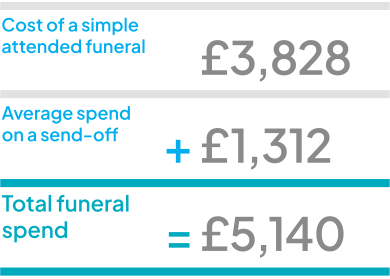
But not everybody chooses everything. When weighted by the percentage of organisers picking each extra, the average send-off spend is £1,312. That equates to a rise of 5.3% year on year.
What do we spend on a funeral in total?
Taking the most common funeral type – a simple attended one – and combining it with the average send-off spend, the total cost is £5,140.
Given the amount of choice now available to consumers, the price you might pay for a funeral could vary significantly.
For instance, cost savings could be made by opting for a direct cremation. Or choosing more of the send-off extras could push up the price.

The future of funerals
What type of funeral are people choosing?
At 53%, an attended cremation is the most popular type of funeral, although it’s decreased by 2% on the previous year. In contrast, the percentage of funerals that are burials has gone up by 1% to 26%.
21% of people describe the funeral they organised as a direct cremation – also up 1% on the year before.
| Attended cremations | Burials | Direct cremations | |
| 2019 | 74% | 23% | 3% |
| 2020 | 59% | 26% | 14% |
| 2021 | 57% | 25% | 18% |
| 2022 | 57% | 25% | 18% |
| 2023 | 53% | 27% | 20% |
| 2024 | 55% | 25% | 20% |
| 2025 | 53% | 26%* | 21% |
*2% of funerals are described as direct burials.
The continued popularity of direct cremations
The number of direct cremations swelled during the pandemic – out of necessity – but they’ve remained popular even in the years after COVID-19 restrictions.
A direct cremation also needn’t take place in isolation. 86% of these organisers say they held a small gathering, wake, memorial service – or combination of these – beforehand or afterwards. This highlights how important some kind of service can be to those grieving.
What are the challenges facing the funeral industry?
Today, funeral directors are most worried about:
- The rise of direct cremations, particularly from online providers
- Local competition, especially with the lack of regulation
- The lack of burial plots
- Families that aren’t able or don’t want to pay
Paying for a funeral
Who’s paying for funerals?
70% of people make provisions specifically to pay for their funeral before they pass away (up 2% on the year before).
But only 42% (down 1% on 2024) put enough aside to cover the whole cost of the funeral.
On top of the deceased’s provisions, many organisers are funding funerals through their own or alternative means (such as a government grant).
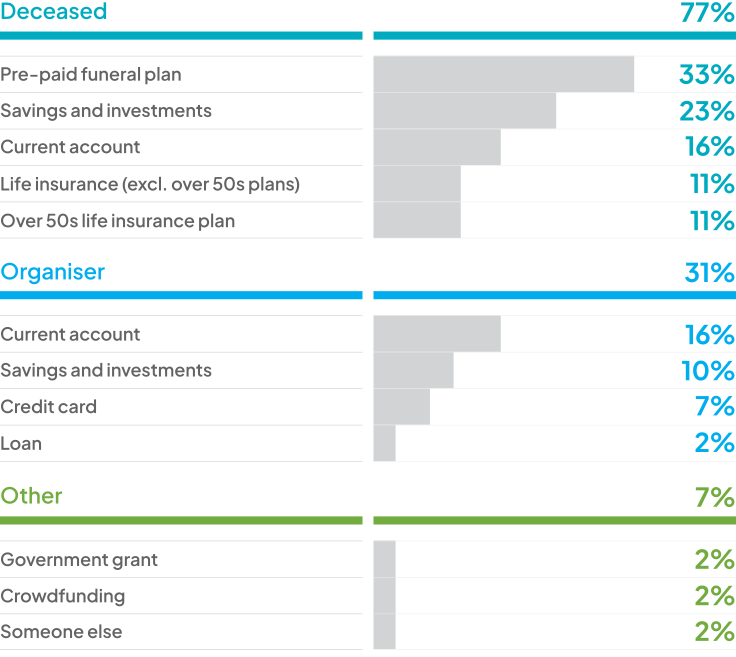
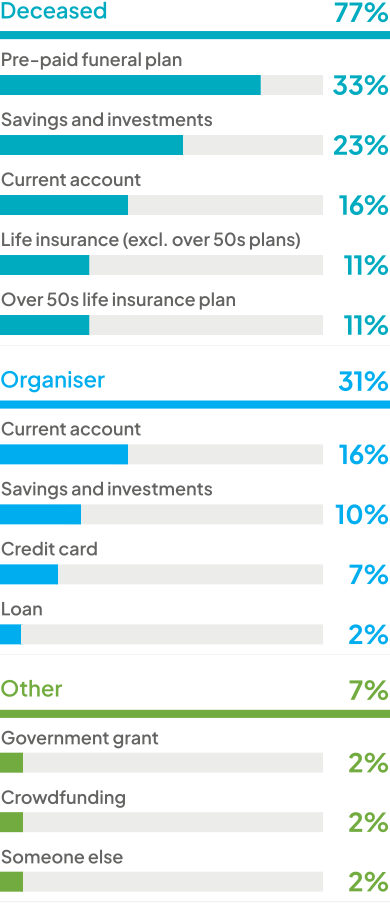
The data is as follows:
- Deceased, 77%
- Pre-paid funeral plan, 33%
- Savings and investments, 23%
- Current account, 16%
- Life insurance (excl. over 50s plans), 11%
- Over 50s life insurance plan, 11%
- Organiser, 31%
- Current account, 16%
- Savings and investments, 10%
- Credit card, 7%
- Loan, 2%
- Other, 7%
- Government grant, 2%
- Crowdfunding, 2%
- Someone else, 2%
How are loved ones making up the funeral costs?
15% of families experience notable financial concerns when paying for a funeral. This is down from 18% in 2024 and the 20% we saw in 2023 at the height of the cost-of-living crisis. On average, they have to find £2,365 to cover the costs.
Many of them find the money by delving into their savings and investments (37%), borrowing from a friend or relative (23%), or using a credit card (22%). The number of people paying the funeral director in instalments has jumped from 19% to 24%.
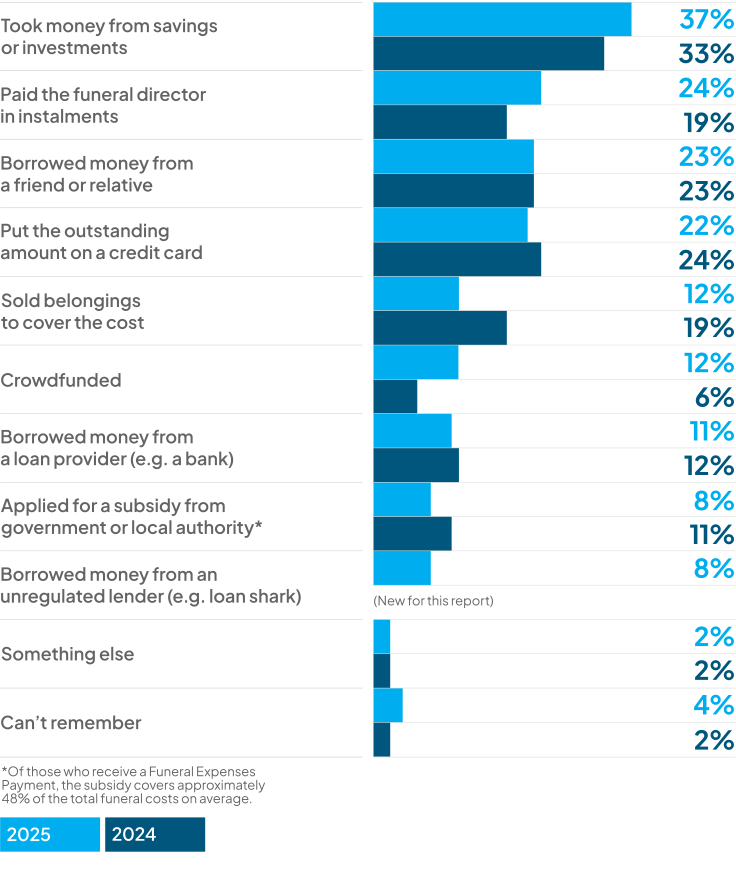
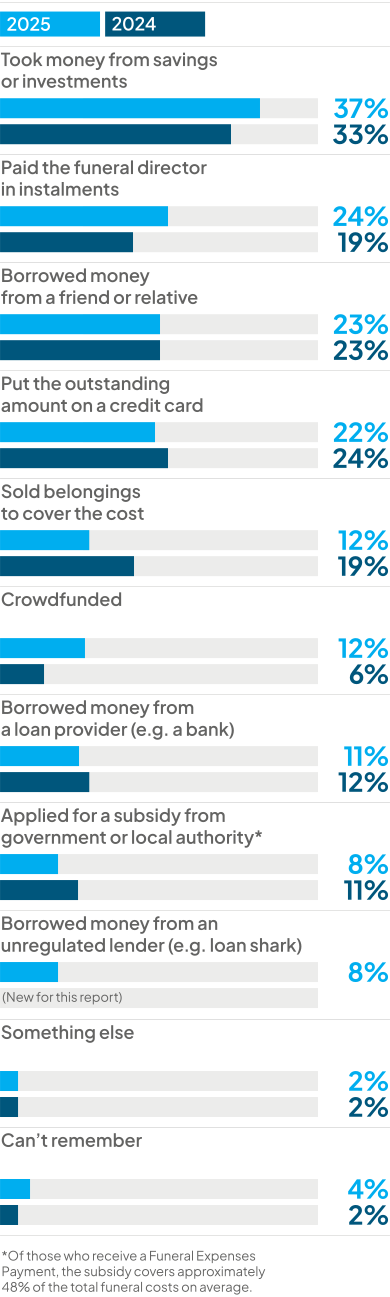
The data is as follows:
- Took money from savings or investments. 37% 2025, 33% 2024
- Paid the funeral director in instalments. 24% 2025, 19% 2024
- Borrowed money from a friend or relative. 23% 2025 & 2024
- Put the outstanding amount on a credit card. 22% 2025, 24% 2024
- Sold belongings to cover the cost. 12% 2025, 19% 2024
- Crowdfunded. 12% 2025, 6% 2024
- Borrowed money from a loan provider (e.g. a bank). 11% 2025, 12% 2024
- Applied for a subsidy from government or local authority*. 8% 2025, 11% 2024
- Borrowed money from an unregulated lender (e.g. loan shark). 8% 2025, (new for this report)
- Something else. 2% 2025 & 2024
- Can't remember. 4% 2025, 2% 2024
*Of those who receive a Funeral Expenses Payment, the subsidy covers approximately 48% of the total funeral costs on average.
The impact of paying for a funeral on our standards of living and wellbeing
For 18%, paying for a funeral affects their standard of living. 5% struggle to pay essential bills or rent, and 7% have to cut back on essential items such as food.
The good news is that all of these figures have dropped from the previous year. In 2024, 22% reported an impacted standard of living – and in 2023, that number was 24%.
For some, paying for a funeral doesn’t just cause money troubles – it also has an effect on wellbeing.
Of those who experience notable financial difficulties when covering the costs, 70% report an impact to their mental health. And 58% see an impact to their physical health.
Tips and advice
Cutting costs
With funerals costing so much today, many organisers look for ways to keep spending down. 59% of organisers actively cut back on certain aspects of the funeral to keep costs low.
97% of funeral directors say people spend more money than they need to, on things such as catering and the coffin. A massive 83% of those mention flowers in particular.
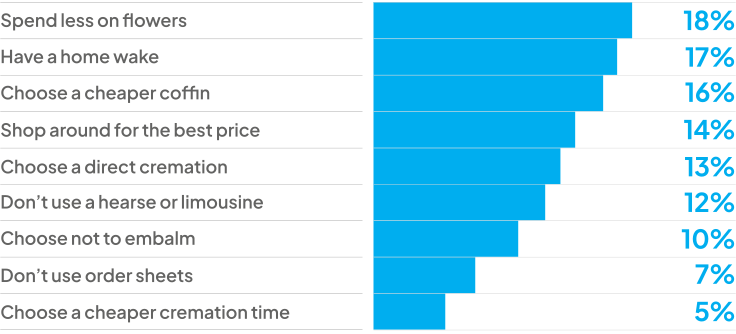
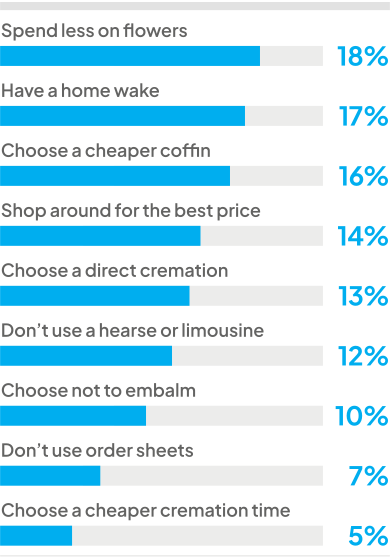
The data is as follows:
- Spend less on flowers, 18%
- Have a home wake, 17%
- Choose a cheaper coffin, 16%
- Shop around for the best price, 14%
- Choose a direct cremation, 13%
- Don't use a hearse or limousine, 12%
- Choose not to embalm, 10%
- Don't use order sheets, 7%
- Choose a cheaper cremation time, 5%
Planning a funeral
Planning a funeral can be difficult. Here are our top tips on how to give your loved one a special send-off while reducing stress…
Advice from funeral organisers
- Take your time
- Choose the right funeral director for you
- Get trusted friends and family involved
- Don’t give into pressure
- Talk about things in advance
Advice from funeral directors
- Don’t be afraid to ask questions
- Ask for a cost breakdown
- Do your loved one proud – without overspending
- Be diplomatic with your family
- But ultimately, do what you think is right
Funeral wishes
Let’s talk about funeral wishes
Brits still don’t like talking about death and funerals. In fact, 53% (2% up on 2024) don’t even know if their loved one wanted a burial or cremation.
As in previous years, 18% don’t know any of the deceased’s funeral wishes. And, once again, less than 1% know all their wishes.
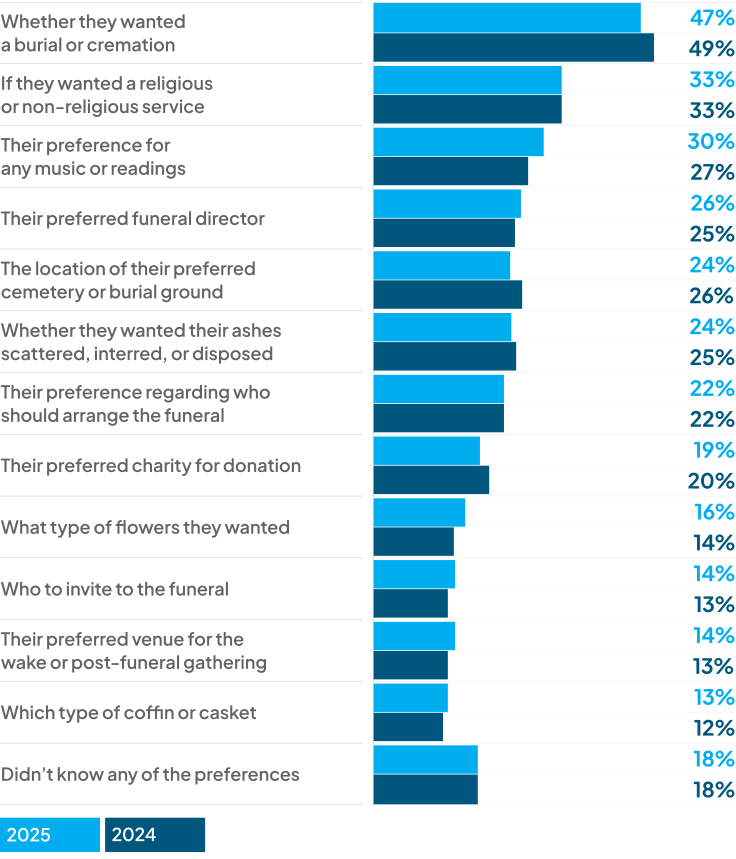
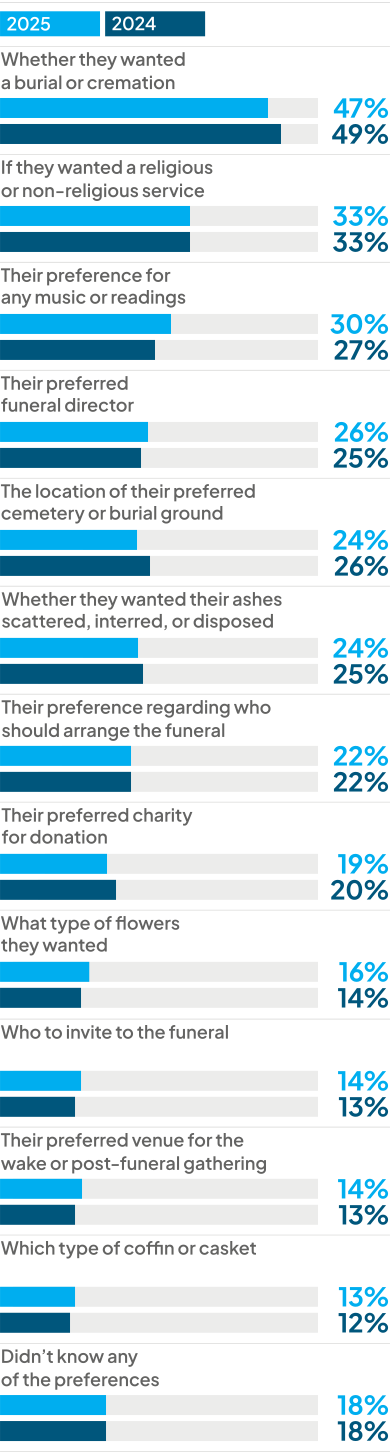
The data is as follows:
- Whether they wanted a burial or cremation. 47% 2025, 49% 2024
- If they wanted a religious or non-religious service. 33% 2025 & 2024
- Their preference for any music or readings. 30% 2025, 27% 2024
- Their preferred funeral director. 26% 2025, 25% 2024
- The location of their preferred cemetery or burial ground. 24% 2025, 26% 2024
- Whether they wanted their ashes scattered, interred, or disposed. 24% 2025, 25% 2024
- Their preference regarding who should arrange the funeral. 22% 2025 & 2024
- Their preferred charity for donation. 19% 2025, 20% 2024
- What type of flowers they wanted. 16% 2025, 14% 2024
- Who to invite to the funeral. 14% 2025, 13% 2024
- Their preferred venue for the wake or post-funeral gathering. 14% 2025, 13% 2024
- Which type of coffin or casket. 13% 2025, 12% 2025
- Didn't know any of the preferences. 18% 2025 & 2024
Are we planning ahead?
Despite the fact that we’re still not talking about funerals much, organising one prompts 65% to start thinking about their own send-off – the same as the previous year.
What’s more, the number of funeral organisers who’ve made a will has risen to 35%, which is 7% up on 2024.
But fewer people – 21%, down 5% – have spoken to a loved one about their preferences. And those who haven’t made any of their wishes known at all has risen from 21% in 2024 to 35% in 2025. So there’s still work to be done.
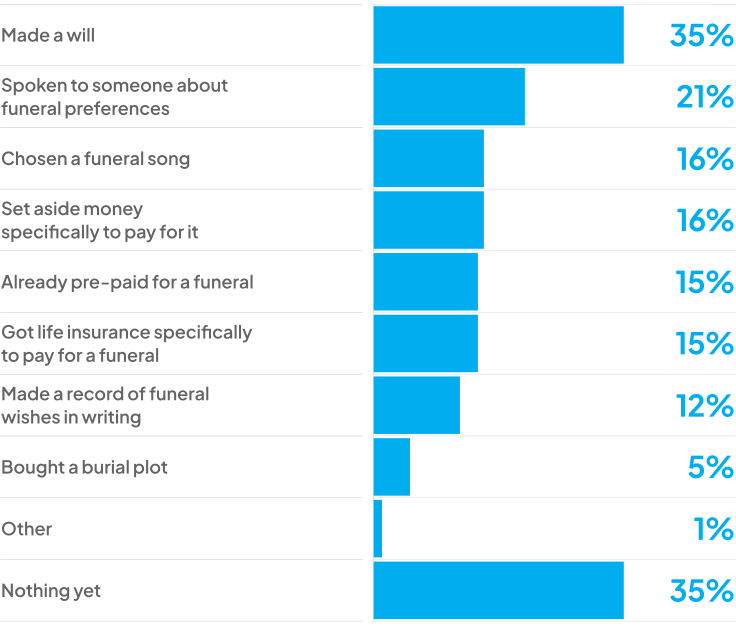
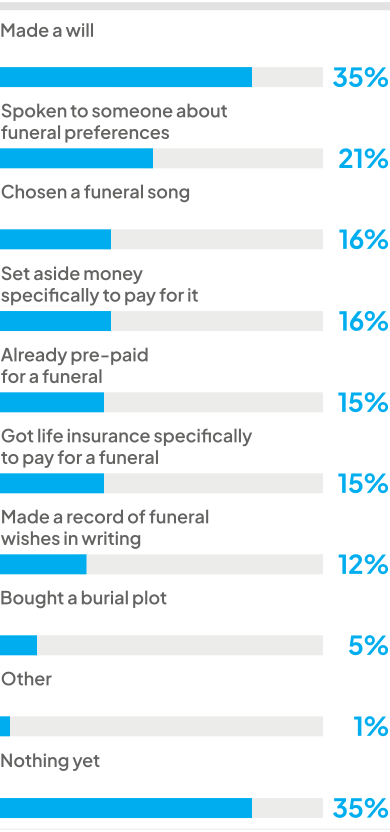
The data is as follows:
- Made a will, 35%
- Spoken to someone about funeral preferences, 21%
- Chosen a funeral song, 16%
- Set aside money specifically to pay for it, 16%
- Already pre-paid for a funeral, 15%
- Got life insurance specifically to pay for a funeral, 15%
- Made a record of funeral wishes in writing, 12%
- Bought a burial plot, 5%
- Other, 1%
- Nothing yet, 35%
Trends and traditions
Attitudes have shifted
2025 saw a jump in the number of funeral services described as a celebration of life.
58% of those who organised a funeral say it was a celebratory affair, compared to 51% the year before. That’s a 27% rise since 2017.
And 70% of funeral directors say they’ve seen a rise in the number of these services.
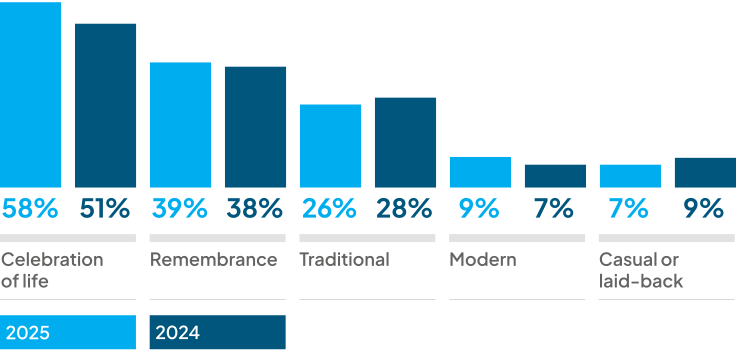
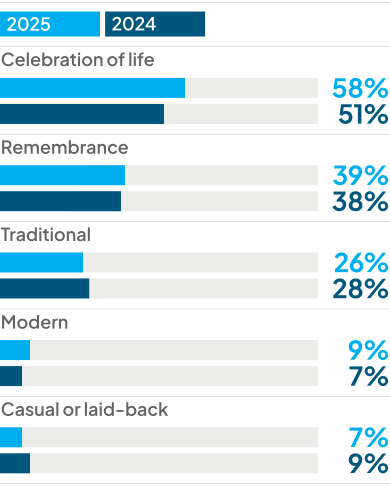
The data is as follows:
- Celebration of life. 58% 2025, 51% 2024
- Remembrance. 39% 2025, 38% 2024
- Traditional. 26% 2025, 28% 2024
- Modern. 9% 2025, 7% 2024
- Casual or laid-back. 7% 2025, 9% 2024
What trends are funeral directors seeing?
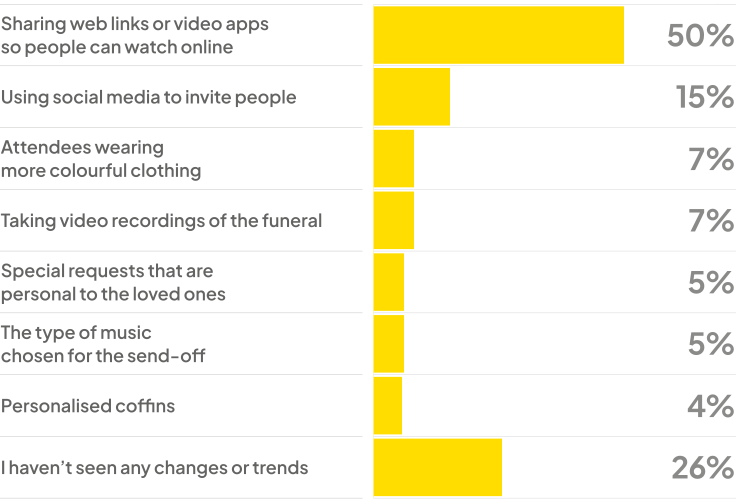
In 2025, 74% of funeral directors say they’ve seen trends or changes in the funerals they’re organising – 19% less than in 2024.
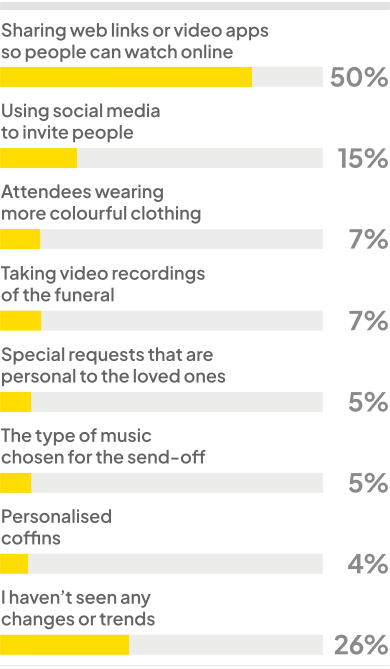
This may well be because more celebratory trends are becoming the ‘new normal’ – for example, streaming the service (50%), inviting people on social media (15%), and wearing colourful clothes (7%).
The data is as follows:
- Sharing web links or video apps so people can watch online, 50%
- Using social media to invite people, 15%
- Attendees wearing more colourful clothing, 7%
- Taking video recordings of the funeral, 7%
- Special requests that are personal to the loved ones, 5%
- The type of music chosen for the send-off, 5%
- Personalised coffins, 4%
- I haven't seen any changes or trends, 26%
What are we doing with our loved one’s ashes?
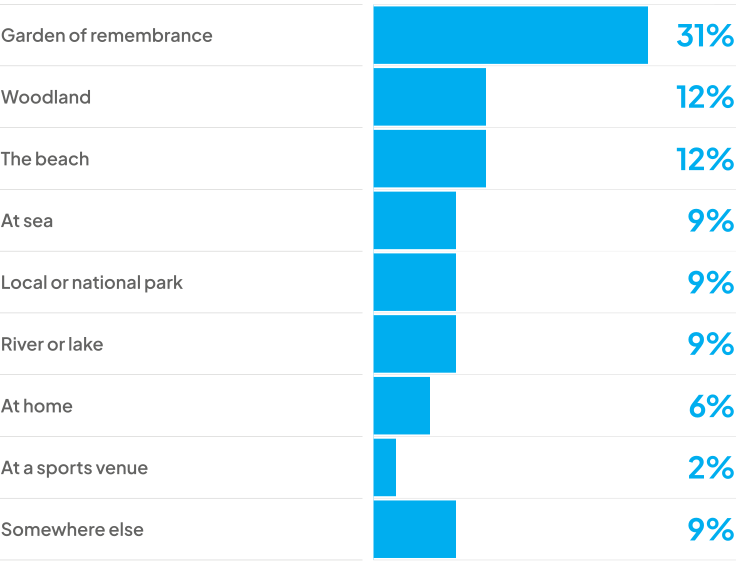
51% of cremation organisers scatter their loved one's ashes. 30% keep the ashes, and 18% bury them.
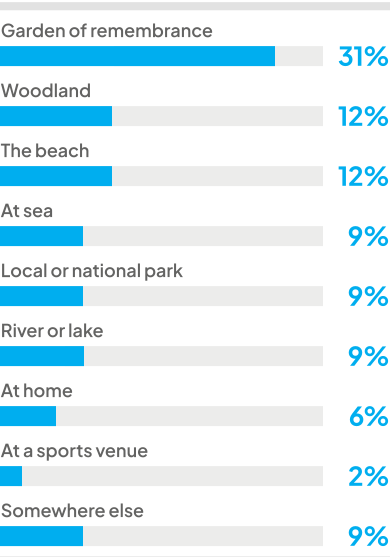
The most popular place to scatter a loved one’s ashes is still in a garden of remembrance (31%). 12% of people choose a woodland or the beach, while 9% choose at sea, a park, or a river or lake. And just like in previous years, 2% scatter the ashes at a sports venue.
The data is as follows:
- Garden of remembrance, 31%
- Woodland, 12%
- The beach, 12%
- At sea, 9%
- Local or national park, 9%
- River or lake, 9%
- At home, 6%
- At a sports venue, 2%
- Somewhere else, 9%
The nation’s favourite funeral songs
An easy way to make a funeral service more personal is to choose songs that mean something to you and your loved ones.
‘Abide with Me’ replaces ‘My Way’ by Frank Sinatra as the most played song at funerals. But ‘My Way’ is still the top choice for those who’ve given some thought to their own send-off.
Find out more about funeral planning
Our collection of funeral planning articles can help with arranging a loved one’s send-off, getting your own affairs in order, or supporting someone at a difficult time. Plus our tools are perfect for thinking about and recording what you’d like once you’re gone:
Download the latest report
For even more insight into current funeral costs and trends, download our latest report.
We’ve been tracking funeral costs since 2004 at SunLife. If you need any past reports – or have any questions about this one – please email our press office.